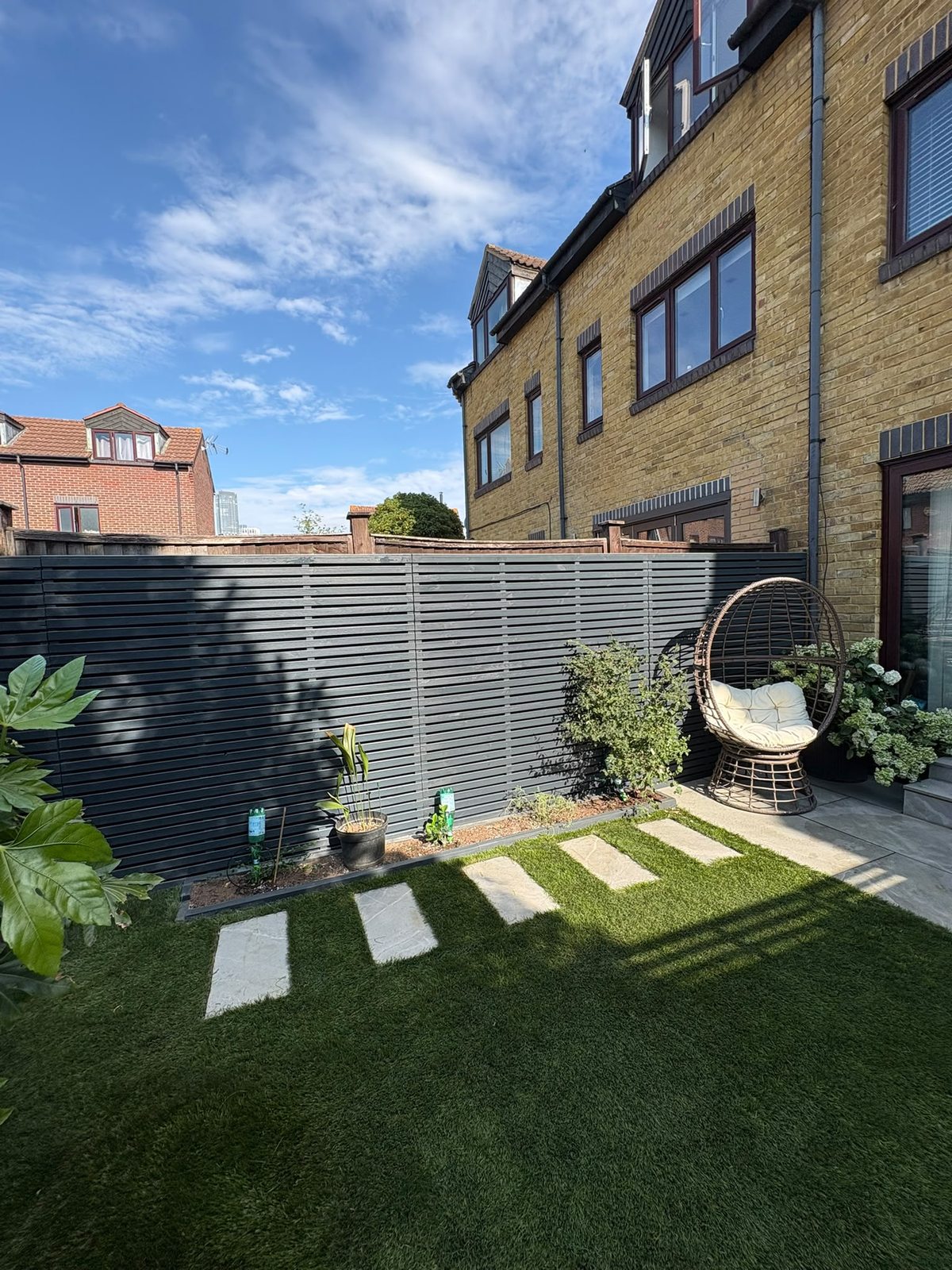
Scroll London garden Instagram for ten minutes and you'll see it: everyone's picking a side. One camp is sharp, clean and modern. The other is soft, natural and a bit rough round the edges. Both are having a massive year, and we've built both in the last few months. Here's the honest version of each, including the bits the Pinterest boards leave out.
Camp one: clean and modern. Big-format porcelain laid dead flat with tight joints. Artificial grass that's green in February. Double-slatted fencing in black or dark timber. Everything square, everything deliberate. Porcelain's grown up a lot. A few years ago people treated it like a fad. Now it's a serious long-term material: hard-wearing, stain-resistant and about as low-maintenance as paving gets.
Done right, it's genuinely striking. One garden we finished recently came out like a boutique hotel terrace. As I said on the day we wrapped up: it looks like a hotel in Greece, when really you're in Shepherd's Bush. That's the magic of modern. It can take a small London garden somewhere else entirely.
The honest bit: it's unforgiving. Every leaf, every muddy paw print, every bit of sloppy workmanship shows. Porcelain laid badly looks worse than cheap paving laid well, so it's the one place you really don't want to cut corners on the base or the installer.
Camp two: natural and rustic. At the other end, natural stone is back at the top of the market, but the rougher versions: riven and tumbled finishes, soft edges, every slab a bit different. Paired with reclaimed brick, oak, gravel and loose, layered planting. It's closer to a farmhouse than a hotel, and it's basically the outdoor version of the warm interiors that have finally killed off grey.
A job we've just finished in West London leans this way: warm, lived-in, relaxed, made to look like it's always been there. The beauty of rustic is it hides wear and actually gets better with age. The catch is it can tip into scruffy if nobody's looking after it.
Planting's going wild, on purpose. Across both styles, neat little manicured borders are on the way out. Naturalistic planting is in: ornamental grasses, meadow-style drifts, and pollinator favourites like lavender, salvia, verbena and echinacea. The colours mirror what's going on indoors too: burgundy, dusky mauve, copper, plum. Fewer of the bright bedding plants your nan loved.
One thing almost nobody knows. In England, paving over more than five square metres of a front garden with a surface that doesn't drain usually needs planning permission. That's a big reason gravel, permeable paving and planted gaps are showing up at the front of more houses. Worth knowing before anyone quotes you for wall-to-wall paving out front.
So which one's right for you?
Start with the house, not the trend. A modern extension with big glass doors usually suits clean porcelain and crisp lines, because the garden reads as part of the room. An old brick terrace, or a house that's going warm and earthy inside, normally looks better with natural materials that soften over time.
Then be straight with yourself about maintenance. Modern is low-effort but shows everything. Rustic forgives a lot but still needs a proper cut-back once a year.
Plenty of the best gardens borrow from both: clean paving with soft planting round it, or a rough stone path through a modern lawn. The mistake is mixing them with no plan. Pick a direction first and every decision after that gets easier. And if you can't decide, get someone round who'll give you an honest opinion rather than just the most expensive option.